Recipe
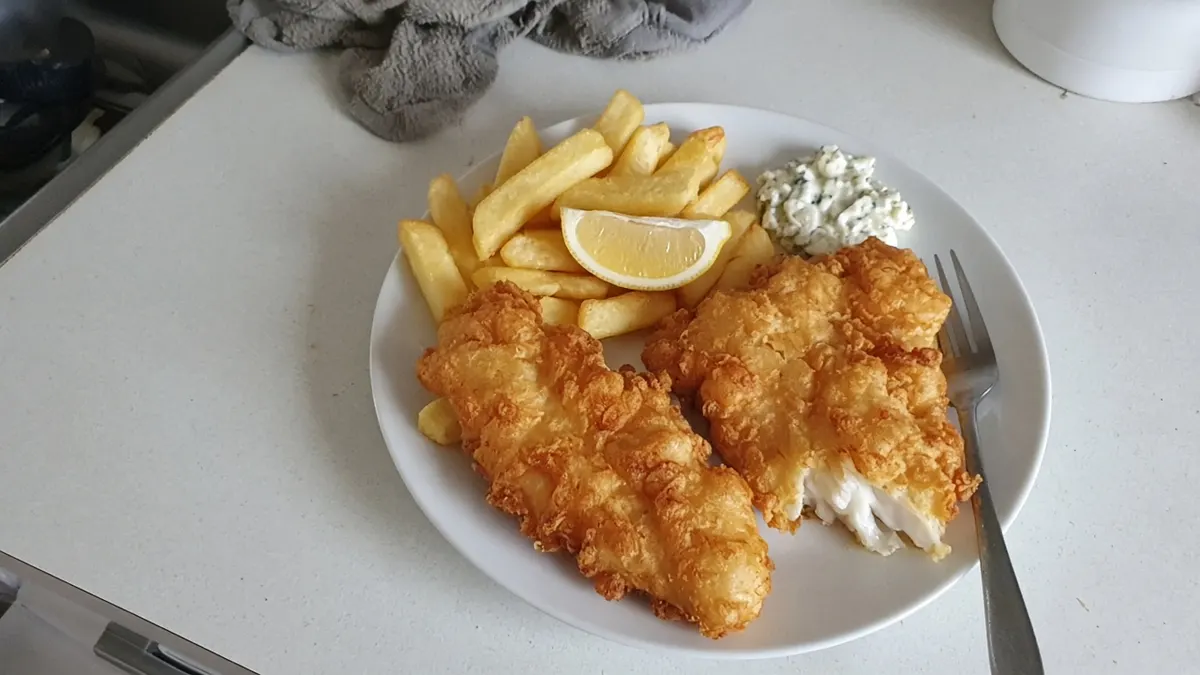
Beer Battered Fish
- Prep
- 15 min
- Cook
- 15 min
- Total
- 30 min
- Serves
- 4
Ingredients
Showing metric amounts (grams, ml and °C)
Method
Step 1: Pat the fish fillets completely dry with paper towel and set aside on a clean plate.
Step 2: Heat about 6cm of oil in a large saucepan or deep fryer to 180C.
Step 3: Whisk the flour, baking powder and salt together in a large bowl. Pour in the cold beer and whisk briefly, just until combined, a few lumps are fine.
Tip: Mix the batter right before frying and don't overwork it, the bubbles from the beer are what make the batter light, and both time and overmixing knock them out.
Step 4: Dust each fillet lightly in extra flour, shaking off the excess, then dip into the batter, letting any excess drip away.
Step 5: Lower the fillets into the oil one or two at a time, holding them in for a few seconds before letting go so the batter doesn't stick to the bottom of the pan.
Tip: Fry in small batches, crowding the pan drops the oil temperature and the batter turns soft and pale instead of crisp.
Step 6: Fry for 4-5 minutes, turning once, until deep golden and the fish is cooked through and flakes easily.
Step 7: Drain on paper towel or a wire rack and season with salt immediately. Serve hot with lemon wedges and tartare sauce.
Tips
- Keep the batter cold until the moment it hits the oil, a cold batter against hot oil is what makes it crisp rather than doughy.
- Pat the fish properly dry before it goes anywhere near the batter, any surface moisture stops the batter sticking evenly.
- Fry in small batches so the oil temperature doesn't drop, a crowded pan is the most common reason beer batter comes out soft.
Variations
- Non-alcoholic: swap the beer for a cold, sparkling soda water, you lose a little flavour but keep the light, bubbly texture.
- Gluten-free: use a gluten-free self-raising flour and a gluten-free beer or cider, the ratio stays the same.
- Different fish: snapper, whiting or basa all work well in place of flathead, just adjust frying time slightly for thicker fillets.
Storage and make-ahead
Best eaten straight from the fryer, the batter softens within 10-15 minutes. Not recommended for freezing. Leftover cooked fish can be reheated in a hot oven for a few minutes to partially recrisp, but won't be quite the same as fresh.
Nutrition per serving, estimated
- Calories
- 420
- Protein
- 32g
- Carbs
- 28g
- Fat
- 18g