Recipe
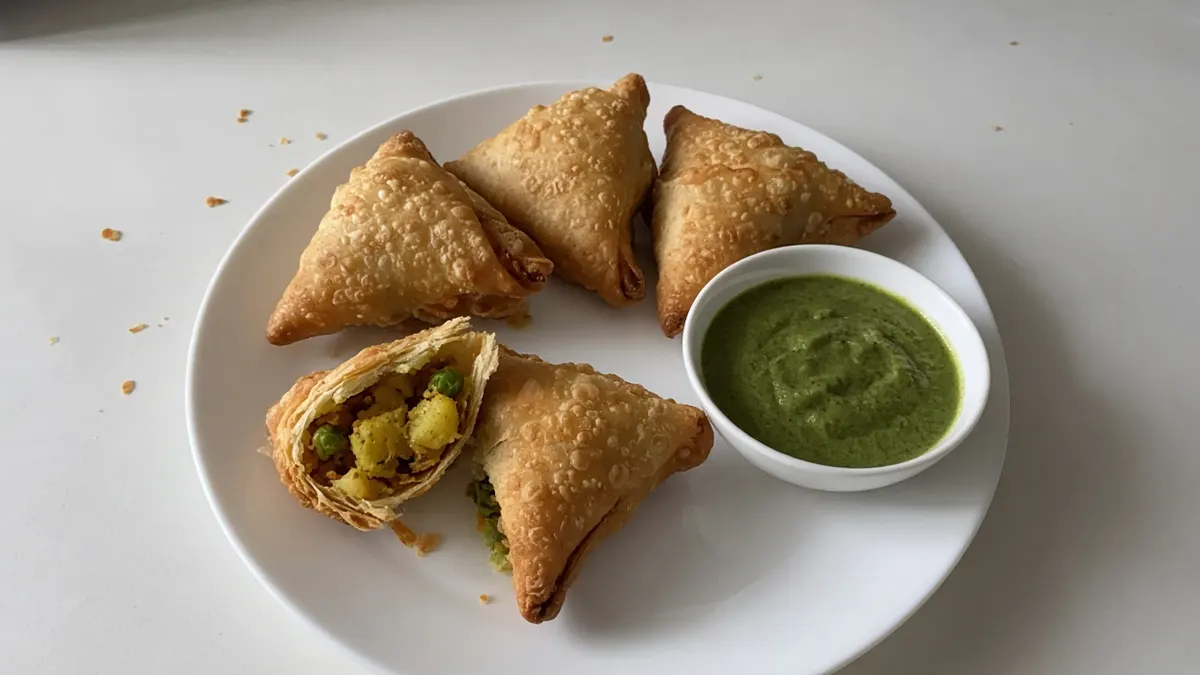
Vegetable Samosas
- Prep
- 40 min
- Cook
- 25 min
- Total
- 1 hr 35 min
- Serves
- 16
Ingredients
Showing metric amounts (grams, ml and °C)
Pastry
Filling
Method
Step 1: Mix the flour, salt and ajwain in a bowl. Rub in the ghee or oil until it looks like coarse breadcrumbs.
Step 2: Add the water gradually and bring together into a firm, smooth dough, slightly stiffer than a normal pastry dough. Cover and rest for 20-30 minutes.
Step 3: Meanwhile, heat the oil in a frying pan over medium heat. Add the cumin seeds and let them sizzle for 30 seconds, then add the ginger and chilli and cook for 1 minute.
Step 4: Add the boiled potato, peas, ground coriander, garam masala, turmeric and salt. Cook, stirring, for 3-4 minutes, mashing the potato roughly as you go so some texture remains.
Step 5: Stir in the lemon juice and coriander leaves. Take off the heat and set aside to cool completely.
Tip: The filling needs to be fully cool before it goes into the pastry, a warm filling softens the dough and makes the samosas difficult to seal.
Step 6: Divide the dough into 8 balls. Roll each into an oval about 15cm long, then cut in half to make two semi-circles.
Step 7: Shape each semi-circle into a cone, wetting and pressing the straight edge to seal. Fill with 1-2 tablespoons of the potato mixture, then wet and pinch the top edge closed, pressing in a pleat or two.
Tip: Seal every edge firmly with a little water, a loose seal is what lets oil in and filling out during frying, leaving a greasy, soggy samosa.
Step 8: To fry: heat oil in a deep pan to a gentle medium-low heat, around 160C. Fry the samosas in batches, turning occasionally, for 10-12 minutes, until golden and crisp.
Step 9: To bake instead: preheat the oven to 200C (180C fan-forced), brush the samosas with oil and bake for 25-30 minutes, turning halfway, until golden.
Tips
- Cook the filling and let it cool fully before assembling, warm filling softens the pastry and makes a firm seal almost impossible.
- Fry or bake at a moderate, steady heat rather than high, the outside can brown before the pastry underneath is properly cooked through if the heat's too fierce.
- Seal every edge with water and a firm pinch, a gap anywhere along the seam is where oil gets in and filling leaks out.
Variations
- Baked (lower-fat) version: as described above, brushed with oil and baked rather than fried, the result is a little less crisp but still good.
- Add paneer: fold 100g of crumbled paneer through the potato mixture for a richer filling.
- Gluten-free: swap the plain flour for a gluten-free plain flour blend, the dough will be more delicate so handle it gently when shaping.
- Vegan: already vegan as written if you use oil instead of ghee throughout.
Storage and make-ahead
Uncooked, shaped samosas freeze well for up to 2 months, fry or bake straight from frozen, adding a few extra minutes. Cooked samosas keep in an airtight container in the fridge for up to 3 days, reheat in the oven or an air fryer to crisp them back up, the microwave leaves them soggy.
Nutrition per serving, estimated
- Calories
- 140
- Protein
- 3g
- Carbs
- 18g
- Fat
- 6g