Recipe
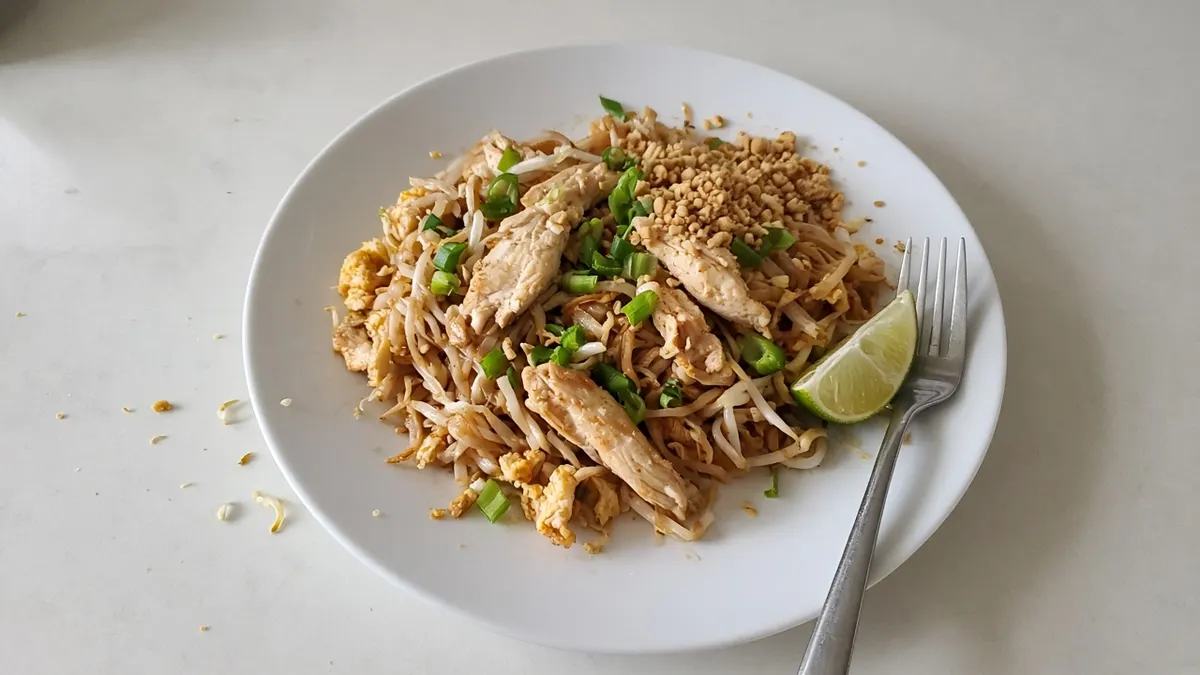
Chicken Pad Thai
- Prep
- 15 min
- Cook
- 15 min
- Total
- 30 min
- Serves
- 3
Ingredients
For the sauce
For the noodles
Method
Step 1: Put the noodles in a large bowl and cover with very hot tap water. Soak for 8 to 10 minutes, until they are pliable but still firm in the centre. Drain, rinse briefly with cold water and toss with 1 teaspoon of the oil so they don't stick.
Tip: Under-soaked is better than over-soaked. The noodles finish softening in the sauce.
Step 2: Whisk the tamarind, fish sauce, sugar, rice vinegar and chilli flakes in a small bowl until the sugar dissolves. Taste it. It should be strongly sour, salty and sweet, a little louder than you want the finished dish.
Step 3: Heat 1 tablespoon oil in a large wok or skillet over high heat until it shimmers. Add the chicken in a single layer and cook without moving for 2 minutes, then stir-fry until browned and cooked through, about 3 minutes more. Transfer to a plate.
Step 4: Add the remaining oil and the garlic to the pan and stir for 20 seconds. Push the garlic to one side, pour the eggs into the empty space and let them set for about 30 seconds before scrambling into large curds.
Step 5: Add the drained noodles and the sauce. Toss constantly with tongs for 2 to 3 minutes, until the noodles have absorbed most of the sauce and look glossy. Add a splash of water if they stick or still feel firm.
Step 6: Return the chicken to the pan with the bean sprouts and scallions. Toss for 1 minute, just until the scallions turn bright green. Take the pan off the heat.
Step 7: Divide between plates and top with peanuts and cilantro. Serve right away with lime wedges and extra chilli flakes.
Tips
- Tamarind concentrate varies a lot in strength between brands. Start with 2 tablespoons, taste the sauce, and add more if it isn't sour enough.
- Have every ingredient chopped and next to the stove before you start. Once the pan is hot, the cooking takes under 10 minutes.
- If the noodles clump while soaking, a quick rinse under cold water and a little oil will separate them.
Variations
- Prawn pad Thai: swap the chicken for 12 ounces (340 g) peeled prawns and cook them for 2 minutes in step 3.
- Vegetarian: use firm tofu, pressed and cubed, and replace the fish sauce with soy sauce plus a pinch of salt.
Storage and make-ahead
Pad Thai is best eaten straight away. Leftovers keep in an airtight container in the fridge for up to 2 days. Reheat in a hot pan with a tablespoon of water to loosen the noodles. It doesn't freeze well.