Recipe
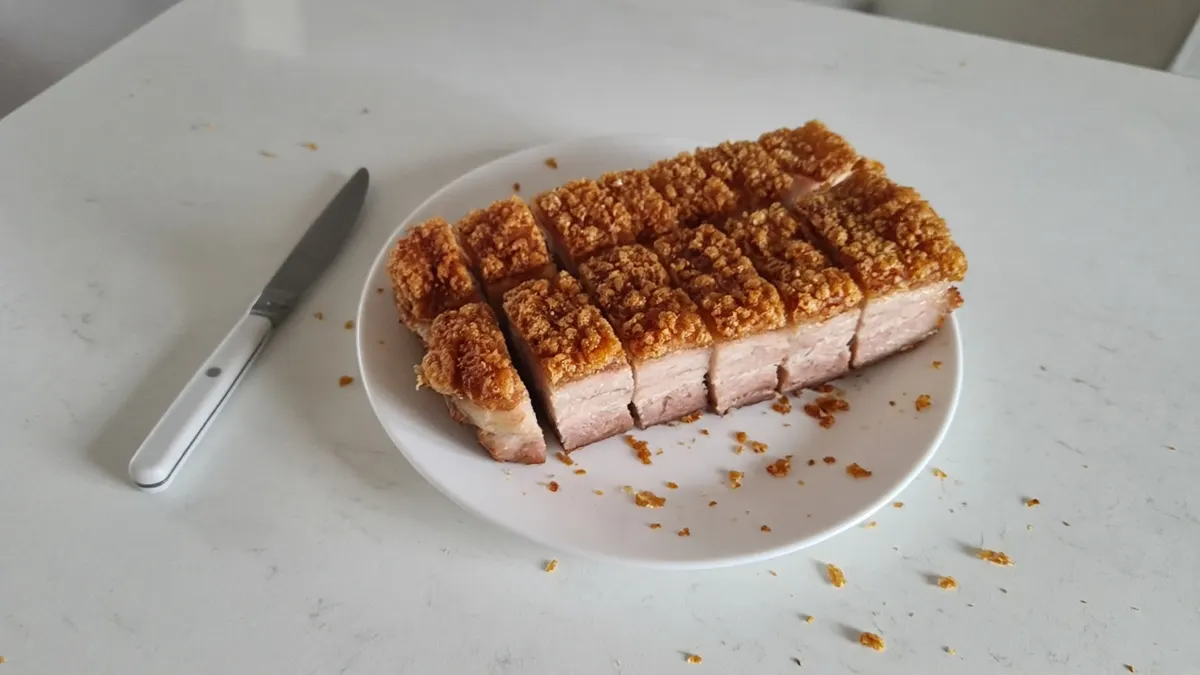
Roast Pork Belly with Crispy Crackling
- Prep
- 20 min
- Cook
- 1 hr 45 min
- Total
- 5 hr 10 min
- Serves
- 8
Ingredients
Showing metric amounts (grams, ml and °C)
Method
Step 1: Pat the pork skin completely dry with paper towel. Sit it uncovered on a plate or tray in the fridge for at least 3 hours, or overnight for the best result.
Step 2: When ready to cook, preheat the oven to 240C (220C fan-forced). Pat the skin dry again, it will have released more moisture overnight.
Tip: Moisture is the only real enemy of good crackling, so this second pat-down right before cooking matters as much as the overnight dry.
Step 3: Rub the vinegar over the skin, working it into the scored lines, then pat dry once more. Rub the olive oil over the skin, then massage the salt generously into every score line, making sure it's evenly covered edge to edge.
Step 4: Scatter the fennel seeds and a good grind of pepper over the meat sides only, keeping the top of the skin just salt. Place the pork skin-side up in a roasting tray.
Step 5: Roast at 240C (220C fan-forced) for 30-35 minutes, until the skin starts to blister and bubble across most of its surface.
Step 6: Reduce the oven to 160C (140C fan-forced) and continue roasting for 60-75 minutes, until the meat is tender and a skewer slides in easily.
Tip: If the skin looks pale in patches once the meat is cooked, finish it under a hot grill for 2-3 minutes, watching closely, rather than leaving the pork in the oven any longer.
Step 7: Rest for 10-15 minutes before carving, tented loosely with foil over the meat only, never the skin, or it will go soft.
Tips
- Dry the skin twice, once before it goes in the fridge and again right before it goes in the oven, this is the single biggest factor in whether the crackling actually crisps.
- Keep the salt off the meat and cut sides of the belly, it draws moisture out of the meat too and can make it taste oversalted while doing nothing useful for the skin.
- Don't tent foil over the skin while resting, even loosely, the trapped steam will soften crackling that took over an hour to crisp up.
Variations
- Five-spice: rub a teaspoon of Chinese five spice into the meat sides (not the skin) along with the pepper, for a warmer, more aromatic version.
- Gluten-free: this recipe is naturally gluten-free as written.
- Dairy-free: already dairy-free, no changes needed.
Storage and make-ahead
The crackling is best eaten the day it's made, it softens on standing and doesn't recrisp well once cold. Leftover meat keeps in the fridge for up to 3 days; reheat the meat gently and recrisp any leftover crackling separately under a hot grill for a minute or two.
Nutrition per serving, estimated
- Calories
- 480
- Protein
- 24g
- Carbs
- 1g
- Fat
- 42g