Recipe
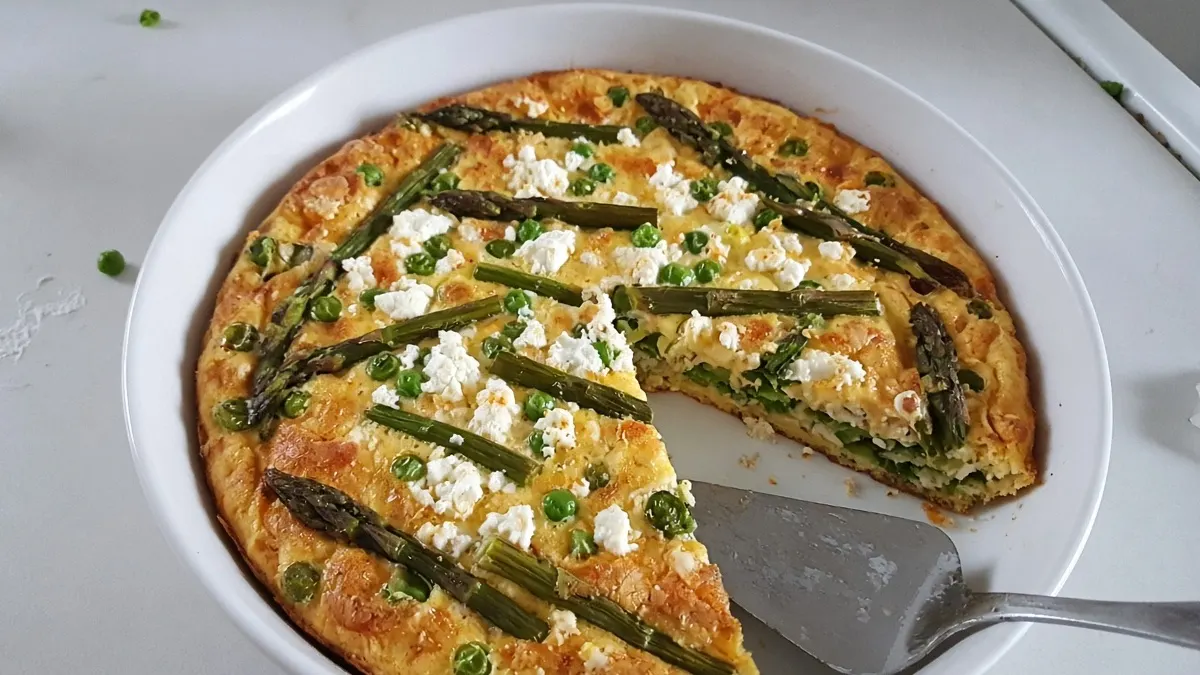
Asparagus, Pea and Feta Frittata
- Prep
- 15 min
- Cook
- 20 min
- Total
- 35 min
- Serves
- 6
Ingredients
Method
Step 1: Bring a saucepan of salted water to the boil. Add the asparagus and peas and cook for 2 minutes, then drain and run under cold water to stop them cooking further.
Step 2: Whisk the eggs and milk together in a bowl with a pinch of salt and pepper, keeping in mind the feta will add more salt later.
Step 3: Heat the olive oil in a 9½ inch non-stick ovenproof frying pan over medium heat. Add the leek and cook for 4-5 minutes, until soft, then stir in the asparagus and peas and spread everything evenly over the base of the pan.
Step 4: Turn the heat down to low. Pour in the egg mixture, scatter over the feta and mint, and cook undisturbed for 8-10 minutes, until the edges are set and the centre is mostly set but still a little wobbly.
Tip: Running a spatula gently around the edge of the pan a couple of times while it cooks stops the frittata sticking and helps it release cleanly later.
Step 5: Heat the grill to high. Put the pan under the grill for 2-3 minutes, until the top is golden and the centre is just set.
Step 6: Rest for 5 minutes, then run a spatula around the edge and slide the frittata onto a board or plate. Cut into wedges to serve.
Tips
- If the handle of your frying pan isn't ovenproof, wrap it tightly in a double layer of foil before it goes under the grill.
- Save the woody asparagus ends for stock instead of throwing them out, they add good flavour to vegetable or chicken stock.
- Don't skip resting the frittata before cutting. It firms up as it sits, and cutting straight away gives you a wet, collapsing wedge.
Variations
- Dairy-free: leave out the feta and milk, use water or a dairy-free milk instead, and season a little more with salt.
- Add potato: fry 2 cups of diced, pre-cooked potato with the leek for a heartier version.
- Herb swap: use dill instead of mint if you want a flavour closer to a classic pea and feta pairing.
Storage and make-ahead
Keeps in an airtight container in the fridge for up to 3 days. Good cold from the fridge or warmed gently in the microwave or a low oven. Not recommended for freezing, the eggs go rubbery on reheating.
Nutrition per serving, estimated
- Calories
- 230
- Protein
- 16g
- Carbs
- 6g
- Fat
- 16g