Recipe
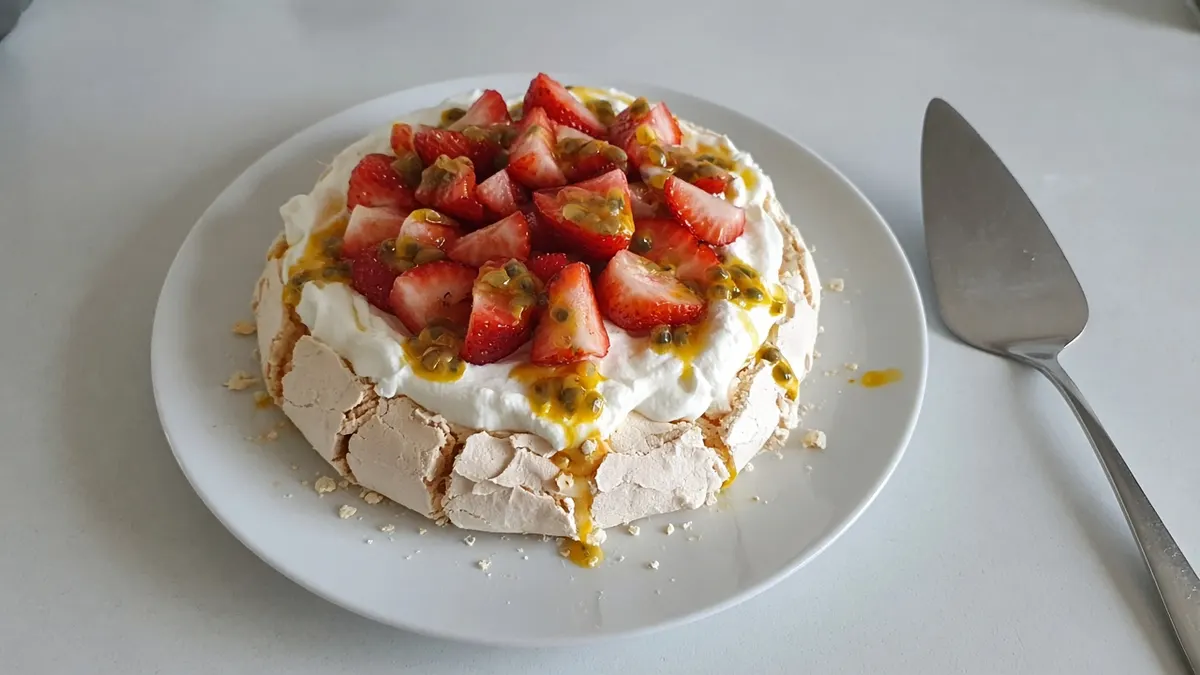
Classic Pavlova with Passionfruit and Strawberries
- Prep
- 25 min
- Cook
- 1 hr 30 min
- Total
- 2 hr 15 min
- Serves
- 10
Ingredients
Pavlova base
Topping
Method
Step 1: Preheat the oven to 150°C (130°C fan-forced). Line a baking tray with baking paper and draw a 20cm circle on it as a guide, then flip the paper over so the pencil mark is underneath.
Step 2: Beat the egg whites and salt in a clean, dry bowl with electric beaters until soft peaks form. With the beaters running, add the caster sugar one tablespoon at a time, waiting about 15 seconds between additions.
Tip: Any grease on the bowl or a trace of yolk in the whites will stop them whipping properly. Wipe the bowl with a little vinegar on paper towel first if you're not sure it's clean.
Step 3: Keep beating for a few minutes after the last of the sugar goes in, until the mixture is thick, glossy and stands in stiff peaks. Rub a little between two fingers: it should feel completely smooth, with no grit of sugar left.
Step 4: Sprinkle over the cornflour, vinegar and vanilla and whisk on low for 10 seconds, just enough to combine. Don't overmix at this stage.
Step 5: Pile the mixture onto the circle on the tray, building the sides up slightly higher than the middle. Smooth the sides with a palette knife or the back of a spoon, then swipe some texture into the surface if you like.
Step 6: Bake for 1 hour 15 minutes, then turn the oven off and leave the pavlova inside with the door closed for another hour. Don't open the door during baking or cooling.
Tip: The shell should sound hollow when tapped and lift cleanly off the paper. If it's still tacky, it needs longer at a low temperature rather than more heat.
Step 7: Once fully cooled, carefully transfer the pavlova to a serving plate. Whip the cream with the icing sugar to soft peaks and pile it over the top. Scatter with strawberries and spoon over the passionfruit pulp just before serving.
Tips
- Separate the eggs while they're cold, straight from the fridge, then let the whites come to room temperature in the bowl. Cold whites separate more cleanly and room-temperature whites whip to a bigger volume.
- A few cracks across the top are normal and get covered by the cream. If the whole centre sinks, the sugar probably wasn't fully dissolved before baking.
- On a humid day, add an extra 15 minutes to the resting time in the switched-off oven.
Variations
- Mango and lime: skip the passionfruit and top with sliced mango and a scattering of lime zest instead.
- Mini pavlovas: shape the mixture into 8 individual rounds and bake for 45 minutes, then rest in the switched-off oven for 30 minutes. Good for a Cup Day spread where everyone wants their own.
- Dairy-free: swap the cream for whipped coconut cream (chill a can overnight, then whip just the solid part).
Storage and make-ahead
Bake the shell up to 2 days ahead and keep it in an airtight container in a cool, dry spot, uncovered cream and fruit. Once topped, it's best eaten within a few hours, as the cream softens the shell as it sits.
Nutrition per serving, estimated
- Calories
- 265
- Protein
- 3g
- Carbs
- 38g
- Fat
- 11g